
In the competitive world of property management, success isn't just about filling units—it's about maximizing returns while minimizing costs and maintaining high tenant satisfaction. The key to achieving this balance lies in tracking the right Key Performance Indicators (KPIs).
Whether you're managing a single rental property or an entire portfolio, these 10 essential KPIs will give you the insights needed to make data-driven decisions and optimize your property management strategy.
Key Takeaways
- Data is Power: Tracking KPIs reveals hidden inefficiencies.
- Focus on Cash Flow: Prioritize rent collection and occupancy.
- Retention Matters: Keeping tenants is cheaper than finding new ones.
- Automate Tracking: Use software to monitor metrics in real-time.
1. Occupancy Rate
The percentage of your units that are rented out. This is your baseline for revenue potential.
Formula: (Occupied Units ÷ Total Units) × 100
Target: 92-97% (Leave room for maintenance/upgrades).
2. Rent Collection Rate
How effectively you collect rent. Low rates indicate screening or process issues.
Formula: (Rent Collected ÷ Rent Due) × 100
Target: >95%
3. Average Days to Rent
The speed at which you fill vacancies. Faster is better for cash flow.
Formula: Total Days Vacant ÷ Number of Vacant Units
Target: 30-45 days (Market dependent).
4. Tenant Retention Rate
The percentage of tenants who renew their leases. High retention reduces turnover costs.
Formula: (Renewals ÷ Expirations) × 100
Target: >75%
5. Maintenance Cost Per Unit
Average cost to maintain each unit annually. Helps in budgeting and forecasting.
Formula: Total Maintenance Costs ÷ Total Units
Target: 1-4% of property value annually.
6. Net Operating Income (NOI)
Total profitability excluding financing and taxes. crucial for valuation.
Formula: Total Income - Operating Expenses
Target: Positive growth year-over-year.
7. CapEx Ratio
Percentage of income spent on major improvements (Capital Expenditures).
Formula: (CapEx ÷ Gross Income) × 100
Target: 8-15%
8. Tenant Turnover Cost
The total cost to replace a tenant (cleaning, marketing, lost rent).
Formula: Total Turnover Costs ÷ Number of Turnovers
Target: Minimize (typically 1-1.5 months' rent).
9. Delinquency Rate
Percentage of tenants behind on rent. A leading indicator of cash flow problems.
Formula: (Delinquent Units ÷ Occupied Units) × 100
Target: <5%< /p>
10. Return on Investment (ROI)
The ultimate measure of profitability relative to your investment.
Formula: (Annual Net Income ÷ Total Investment) × 100
Target: 6-8%+ (Market dependent).
Rentrovio Insight: Automated Analytics
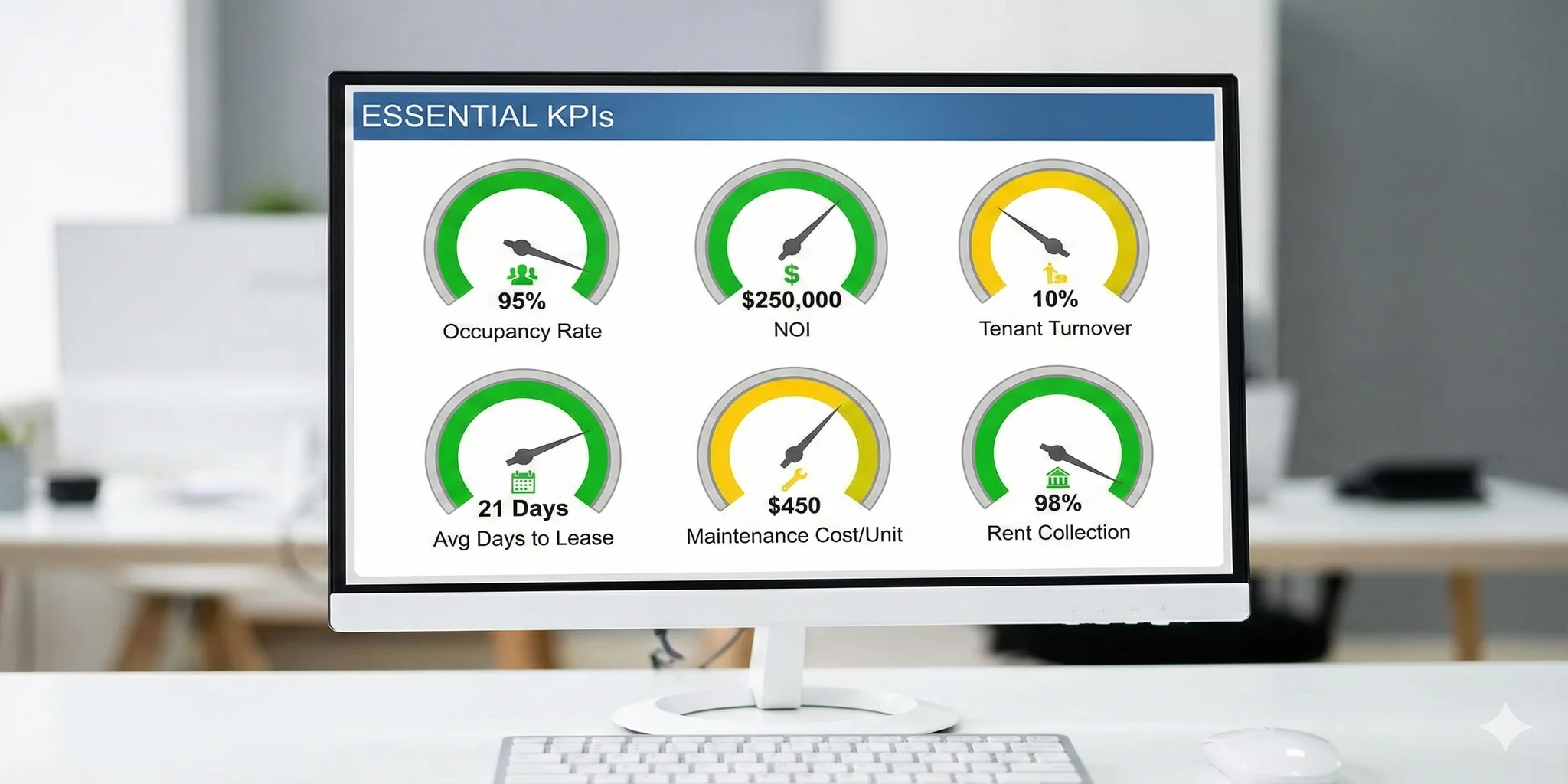
Calculating these metrics manually is tedious and prone to error. Rentrovio's dashboard automatically tracks occupancy, rent collection, and maintenance costs, giving you a real-time health check of your portfolio without the spreadsheet headaches.
Leveraging Technology for KPI Tracking
Modern property management platforms like Rentrovio can automate the tracking of many of these KPIs, providing real-time insights and alerts when metrics fall outside optimal ranges. This automation allows you to focus on strategic decisions rather than data collection.
By consistently monitoring these 10 essential KPIs, you'll gain a comprehensive view of your property management performance and identify opportunities for improvement. Remember that these metrics work best when tracked over time to identify trends and seasonal patterns.
Start with the KPIs most relevant to your current challenges, and gradually expand your tracking as you become more comfortable with data-driven property management.

 Back to Blog