
Key Takeaways
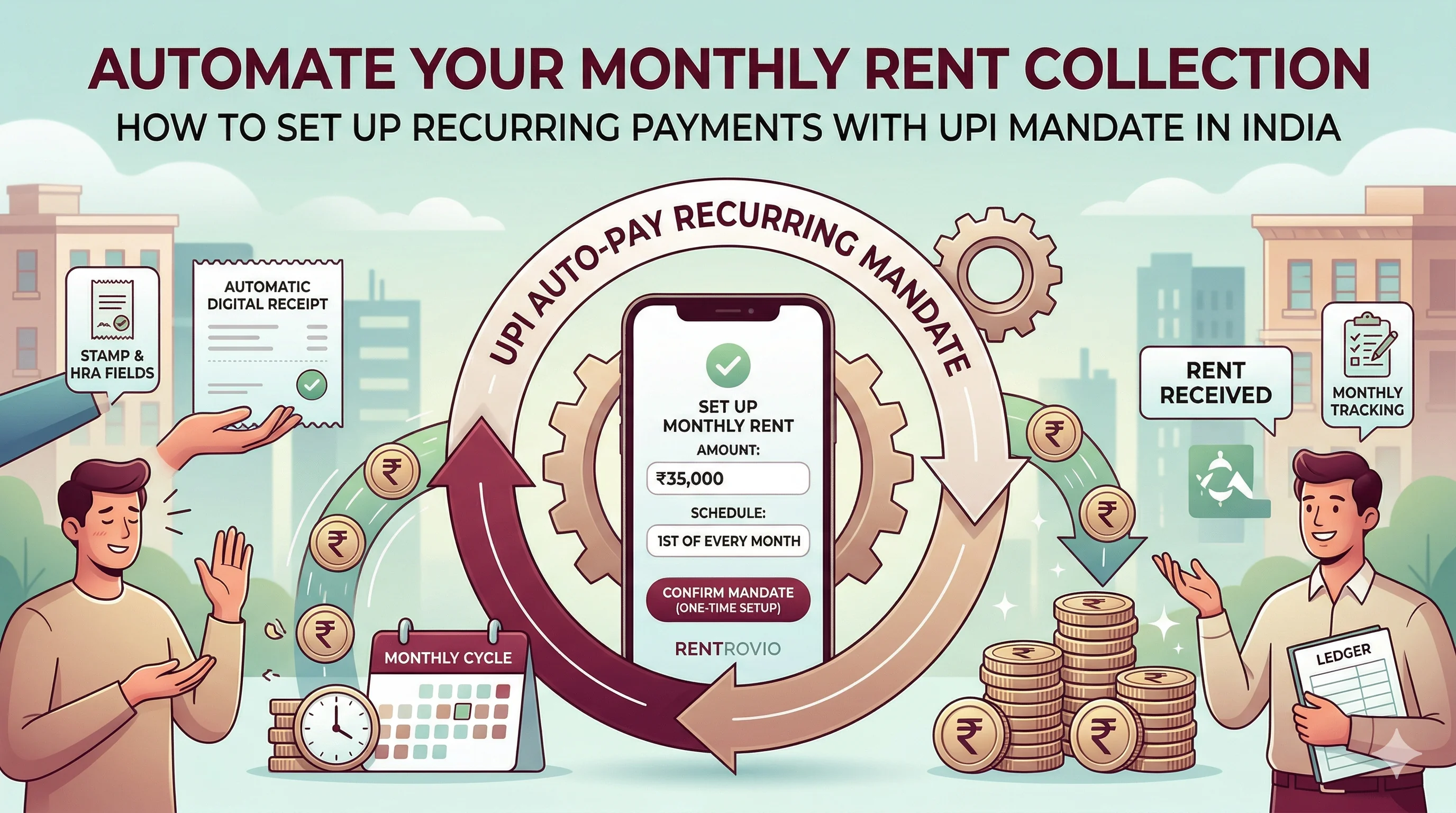
- UPI AutoPay (UPI Mandate) is the most powerful tool for eliminating rent payment delays in India.
- After a one-time setup, rent is debited automatically from the tenant's account on the due date every month.
- The ₹1 lakh per transaction limit covers the vast majority of residential rents across India.
- For complete rent receipts and payment tracking, combine UPI AutoPay with a dedicated rent management platform.
The biggest frustration for Indian landlords is not finding tenants — it is chasing rent every month. Even with good tenants, the 1st or 5th of the month often becomes a source of mild anxiety: Has it been paid? Did the transfer go through? Do I need to send a reminder message again?
UPI AutoPay — officially called UPI Mandate or e-Mandate — completely solves this problem. Once set up, rent is debited from the tenant's account automatically on the agreed date, every month, without any action required from either party. This guide walks you through exactly how it works, how to set it up, and what to watch out for.
What is UPI AutoPay?
UPI AutoPay (known technically as UPI Recurring Mandate or UPI e-Mandate) is a feature of the UPI ecosystem, introduced by NPCI (National Payments Corporation of India) and approved by RBI. It allows a payer to pre-authorise recurring debits from their UPI-linked bank account.
Key characteristics:
- One-time setup: Tenant registers the mandate once — future payments happen automatically.
- Pre-defined amount and frequency: You set the maximum amount and monthly schedule at setup.
- RBI-regulated: Governed by RBI's e-Mandate framework — consumer protections apply.
- Works across UPI apps: Supported by GPay, PhonePe, Paytm, BHIM, and most bank UPI apps.
UPI AutoPay Limits for Rent Payments in 2026
Understanding the current UPI AutoPay limits is essential for determining whether it suits your specific rent amount:
| Amount per Transaction | Authentication Required? | Notes |
|---|---|---|
| Up to ₹15,000 | Fully automatic | No tenant action needed on payment day |
| ₹15,001 – ₹1,00,000 | Pre-notification 24hrs before | Tenant receives notification; can block if needed |
| Above ₹1,00,000 | Full authentication required | Tenant must actively approve each debit |
For most residential rents in Indian cities — which typically range from ₹8,000 to ₹80,000/month — UPI AutoPay works seamlessly within the supported limits.
How to Set Up UPI AutoPay for Rent: Step-by-Step
There are two approaches to setting up recurring rent payments with UPI:
Option A: Through a Dedicated Rent Management App (Recommended)
The cleanest implementation is through a platform like Rentrovio's rent collection app, which handles mandate creation, payment tracking, and receipt generation in one place:
- Landlord sets up the property and adds the tenant in Rentrovio.
- Configure the rent amount, due date, and grace period.
- Send an AutoPay setup invitation to the tenant via the app.
- Tenant opens the link in their UPI app and approves the mandate (one-time, takes 60 seconds).
- Every month on the due date, rent is auto-debited and a receipt is generated automatically for both parties.
- If the debit fails, both get an instant alert and the tenant is prompted to pay manually.
Option B: Direct UPI App Setup (Limited)
Some UPI apps (GPay, PhonePe) support recurring payment setup directly. The tenant adds a recurring payment to the landlord's UPI ID with a set amount and monthly schedule. This works for the payment itself but does not generate legal rent receipts or provide a payment ledger — it is a partial solution only.
 Rentrovio Insight
Landlords who activate UPI AutoPay through Rentrovio see on-time payment rates rise to 94% from an industry average of 68%. The combination of automatic debit and pre-debit reminders eliminates the "I forgot" payment failure entirely.
Tenant Perspective: Why UPI AutoPay is Good for Tenants Too
Some tenants are hesitant about AutoPay because they worry about loss of control. Address these objections proactively:
- Full control retained: Tenants can pause or cancel the mandate any time from their UPI app — it is not a locked commitment.
- No overdraft risk: If the account has insufficient funds, the debit fails — no penalty from the UPI system (though rent agreement late fees may apply).
- Automatic HRA receipts: Every month, a proper receipt arrives automatically — no chasing the landlord for documentation before the HRA submission deadline.
- Never "forgetting" rent: Eliminates the embarrassment of late rent due to a busy work month.
What Happens When UPI AutoPay Fails?
Payment failures do happen — insufficient funds, bank downtime, expired mandates. A robust system handles failures gracefully:
- Landlord and tenant both receive an instant failure notification.
- The system triggers a manual payment request to the tenant.
- The rent is still tracked as outstanding in the payment ledger.
- If the grace period expires, late fee rules (as configured) apply automatically.
For tenants with a history of insufficient balance failures, consider collecting a post-dated cheque as a backup — the combination of AutoPay + backup cheque provides maximum financial security.
UPI AutoPay vs. Standing Instructions vs. Manual UPI
| Feature | Manual UPI | Bank Standing Instruction | UPI AutoPay |
|---|---|---|---|
| Automation | No | Yes | Yes |
| Setup complexity | Zero | High (bank branch/netbanking) | Low (60-second app setup) |
| Works across banks | Yes | Same bank only | Yes (any UPI-linked bank) |
| HRA-valid receipt | No | No | Yes (via Rentrovio) |
| Payment ledger | No | No | Yes (via Rentrovio) |
Frequently Asked Questions
What is UPI AutoPay and how does it work for rent?
UPI AutoPay (UPI Mandate) is an RBI-approved feature that pre-authorises recurring monthly payments from the tenant's UPI-linked bank account. After a one-time setup, rent is debited automatically on the due date every month — no manual action needed from either party.
What is the maximum UPI AutoPay limit for rent payments?
UPI AutoPay supports up to ₹1,00,000 per transaction. Amounts up to ₹15,000 debit fully automatically. For ₹15,001–₹1,00,000, a 24-hour pre-debit notification is sent to the tenant. Amounts above ₹1 lakh require full authentication per transaction.
Can a tenant cancel a UPI mandate for rent?
Yes. Tenants can cancel or pause their UPI mandate at any time through their UPI app or bank net banking portal. Cancellation doesn't breach the rental agreement — the landlord must then collect rent through an alternative method for that month.
Does UPI AutoPay generate a rent receipt automatically?
Generic UPI AutoPay through GPay or PhonePe only generates a transaction confirmation. To get HRA-valid receipts automatically, use a dedicated platform like Rentrovio, which issues a complete digital receipt after every successful recurring payment.
What happens if a UPI AutoPay rent payment fails?
If the debit fails (insufficient funds or bank downtime), the landlord and tenant both receive an immediate alert. The tenant must pay manually within the grace period. Repeated failures may warrant collecting a post-dated cheque as a payment backup.
Set Up Your First Automated Rent Collection Today
UPI AutoPay is the closest thing to completely passive, zero-friction rent collection that exists in India today. Combined with a dedicated rent collection platform, it gives landlords complete automation — and gives tenants automatic HRA receipts every month.
Set up your Rentrovio account, invite your tenants, and have the first automated rent collection running within the hour. For more on managing all aspects of your rental portfolio, explore the complete landlord management app features.

 Back to Blog